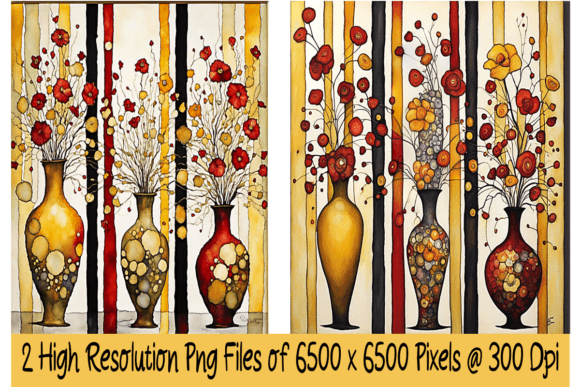
Modernist Floral Still Lifes
Modernist Floral Still Lifes is a collection of AI-generated artworks that bring together the elegance of traditional still life with the bold experimentation of modernist masters like Gustav Klimt and Pablo Picasso. These digital paintings feature three ornamental vases, each overflowing with vibrant blooms in shades of orange, pink, and purple. Rendered in high-resolution through neural networks, the compositions are framed by intricate decorative borders that enhance their visual complexity and artistic depth.
Visual Characteristics and Style
The collection draws from early 20th-century modernism, where form, color, and abstraction took center stage. The flowers are stylized rather than photorealistic—each petal and stem infused with geometric flair or fluid, almost symbolic shapes. This approach echoes the flattened perspectives of Picasso’s cubist works and the rich, golden hues found in Klimt’s pieces. The vases themselves act as sculptural elements, their designs ranging from angular and asymmetrical to curvilinear and opulent, depending on the piece.
What makes these still lifes particularly compelling is the balance between tradition and innovation. The use of artificial intelligence allows for an exploration of forms and palettes that might be difficult or time-consuming to achieve manually. Yet, the human touch remains vital: I guide the creative process with carefully crafted prompts and parameters, curating the best results and adding my own artistic refinements when needed. This collaboration between man and machine produces art that feels both contemporary and timeless.
Aesthetic Personality and Appeal
These still lifes have a strong sense of sophistication and energy. They’re not subtle—they demand attention with their vivid colors and dynamic compositions. The personality of each artwork varies slightly, but they all share a common thread: a celebration of floral beauty through a modern lens. Their appeal lies in this duality—the marriage of organic elements with structured design, resulting in images that feel alive yet composed.
They're ideal for those who appreciate avant-garde aesthetics and want to incorporate them into their personal or professional spaces. Whether you're a designer looking to add unique visuals to your portfolio or an entrepreneur aiming to elevate your brand's look, these pieces offer a fresh take on floral art that stands out without being overwhelming.
Where Modernist Floral Still Lifes Shine
While these artworks can function independently, they also work beautifully as a triptych. When displayed together within their encircling ornate frame, they create a cohesive narrative that enhances gallery wall displays. The intricate border serves as a unifying element, tying the three panels together while allowing each to maintain its individuality.
- Gallery Walls: These still lifes make excellent focal points in home or office interiors. Their size and detail lend themselves well to larger formats, which are perfect for accentuating walls with character.
- Merchandise & Print Projects: Beyond wall art, the collection is versatile enough to be printed on a wide range of items—from bookmarks and notebooks to sublimated mugs and apparel. The high-resolution quality ensures clarity and impact on every surface.
- Digital Media: The striking style translates well to digital platforms too. Use them as background imagery for social media posts, website headers, or editorial spreads to capture attention and spark conversation.
Design Observations and Recommendations
One of the key strengths of Modernist Floral Still Lifes is its adaptability across mediums. For print projects, ensure the resolution is set at least to 300 DPI to maintain sharpness. In digital contexts, consider using compressed versions optimized for web performance without sacrificing visual fidelity.
When selecting which artwork to feature, think about how it will interact with the surrounding design elements. The ornate borders mean that negative space should be used thoughtfully. Pairing these still lifes with minimalist layouts often highlights their details more effectively, especially in logo design or editorial design settings where visual hierarchy is crucial.
If you're working on packaging design, the bold color schemes can be leveraged to create eye-catching labels or product illustrations. However, be mindful of legibility if text is overlaid—opt for clear typefaces that contrast well with the artwork’s background.
Readability and Brand Perception
Though primarily visual, the typography choices around these artworks play a significant role in how they’re perceived. Since the collection is rooted in modernist principles, pairing it with a premium font—whether serif or sans serif—can help reinforce its aesthetic. A clean, modern sans serif font adds a contemporary edge, while a classic serif complements the ornate framing and historical inspiration.
In logo design or branding contexts, using a display font with strong character can help anchor the image visually. Avoid script or handwritten fonts unless the overall tone aligns with whimsical or luxury aesthetics. The goal is to maintain the professionalism and uniqueness of the still life while ensuring readability and brand consistency.
Font Pairing Tips
For maximum impact, test font pairings against the artwork before finalizing your layout. Here are some practical suggestions:
- Modern Sans Serif: Helvetica Neue or Montserrat work well with the geometric aspects of the vases and flowers.
- Classic Serif: Garamond or Georgia can echo the elegance of the decorative border and provide a refined contrast.
- Display Fonts (for headlines): Use caution—stick to ones with clean lines and avoid overly ornate styles that may compete with the still life itself.
Remember, the right font pairing helps direct the viewer’s eye and supports the message or identity you want to convey. These still lifes are expressive, so the accompanying typography should reflect that energy without overshadowing it.
Commercial Licensing and Project Fit
If you're considering using Modernist Floral Still Lifes for commercial purposes, it's important to review the licensing terms. These pieces are available under a commercial license, making them suitable for a wide range of applications including marketing materials, branded merchandise, and content publishing. Just ensure that any usage adheres to the guidelines provided, especially when it comes to redistribution or modification.
Evaluating project fit begins with understanding the context. Are you designing a boutique line of fashion accessories? The sublimated prints could add a distinctive flair. Is it for a blog post or magazine cover? The triptych format can serve as a powerful visual anchor. Always ask yourself how the artwork will enhance the overall message and user experience.
Testing is also essential. Before committing to large-scale printing or embedding in web design, run small trials. See how the colors render on different materials, how they scale down for smaller screens, and whether they hold up in black-and-white conversions. These observations can save time and resources in the long run.
Practical Applications Across Industries
Here are a few real-world examples of how these still lifes can be applied:
- Marketing Campaigns: Use the AI-generated still lifes as hero images for email newsletters or landing pages focused on lifestyle, fashion, or interior design.
- Content Creation: Bloggers and publishers can integrate these artworks into editorial content to illustrate topics like art history, digital creativity, or home decor trends.
- Branding and Packaging: Small businesses selling artisanal products or stationery can use these images to differentiate their packaging from competitors.
- Social Media Graphics: With slight adjustments in composition, these still lifes can become engaging Instagram posts or Pinterest pins, drawing users in with their visual richness.
The versatility of these pieces means they can be adapted to suit many different needs, but always start by evaluating the audience and purpose. Will the artwork resonate with your target demographic? Does it support the brand’s visual identity? These questions are key to making informed design decisions.
Embracing AI Art in Creative Workflows
Artificial intelligence has opened new doors for artists and designers alike. In the case of Modernist Floral Still Lifes, AI acts as a collaborator rather than a replacement. By providing specific prompts and parameters, I steer the system toward creating compositions that align with the modernist vision I have in mind. But there’s room for serendipity—sometimes the most compelling images emerge from unexpected algorithmic interpretations.
This kind of creative process invites experimentation. If you're a content creator or marketer exploring AI tools, remember that curation is just as important as generation. Don’t settle for the first output you receive. Instead, iterate, refine, and combine AI assets with your own design sensibilities to produce something truly original.
AI-generated art doesn’t just save time—it expands possibilities. You can explore multiple variations quickly, find the perfect match for your project, and even collaborate with other creatives who may prefer certain color palettes or stylistic elements. The result is a more inclusive and dynamic creative landscape.
Final Thoughts on Design Value
Modernist Floral Still Lifes isn’t just about aesthetics; it's about storytelling and connection. Each piece carries the weight of modernist influence while offering a fresh, digital reinterpretation. As such, they can be meaningful additions to both personal and professional projects, helping to communicate values like innovation, artistry, and attention to detail.
Whether you're crafting a brand identity, designing a magazine spread, or simply looking to adorn your space with something memorable, these still lifes offer a blend of tradition and technology that’s hard to ignore. They challenge us to rethink what’s possible in design and remind us that art—like creativity—is evolving.