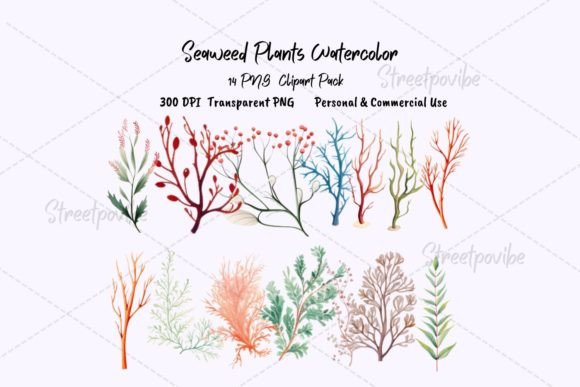
Seaweeds Plant Watercolor Clipart for Creative Projects
Applications Across Design Fields
- Branding and Logo Design: Use seaweed illustrations as supporting elements to add depth and character to logos, especially for eco-friendly or ocean-related brands.
- Marketing Materials: Incorporate them into brochures, posters, or email headers to create a fresh and inviting look.
- Social Media Content: They work beautifully as overlays or accents in posts, stories, and cover photos, helping your content stand out while maintaining a cohesive brand identity.
- Web and UI Design: Perfect for decorative elements, background textures, or icons that reflect a clean, modern aesthetic without overwhelming the user interface.
- Editorial Layouts: Ideal for magazines, blogs, or newsletters focused on sustainability, wellness, or travel, adding a whimsical yet professional feel.
- Packaging Design: Elevate product packaging by using these illustrations to suggest freshness, purity, or connection to nature.
- Presentations and Reports: Enhance slides or infographics with subtle watercolor elements to guide visual hierarchy and improve readability.
- Merchandise and Printables: From t-shirts and mugs to stickers and phone cases, these designs offer a premium look that resonates well with audiences who appreciate handcrafted visuals.
Design Tips for Effective Use
1. Maintain Consistency: Choose clipart that aligns with your existing brand assets. A consistent use of similar styles and color schemes reinforces brand recognition and trust.
2. Focus on Readability: While watercolor illustrations add charm, ensure they don’t interfere with text or critical information. Use them as complementary elements rather than focal points when clarity is essential.
3. Leverage Visual Hierarchy: Position these cliparts strategically within your layout. They can draw attention to sections, frame content, or serve as dividers between blocks of text or data.
4. Optimize for Scalability: Because these PNGs are high-resolution, they scale well without losing quality. However, always test how they appear at both large and small sizes before finalizing a design.
5. Match Audience Expectations: If your target audience prefers minimalist or maximalist styles, adjust the use of clipart accordingly. Subtle placement works best in professional settings, while bolder arrangements suit more playful, lifestyle-oriented projects.